Table Of Content
Sorted, no problems with practice or repeat effects or with boredom or tiredness effects. At the end of this period, their reading was reassessed, and a reading improvement score was calculated. They were then taught using scheme two for a further 20 weeks, and another reading improvement score for this period was calculated.
Random Allocation
No Labels: Why an independent group won't run a US presidential ticket in 2024 - BBC.com
No Labels: Why an independent group won't run a US presidential ticket in 2024.
Posted: Thu, 04 Apr 2024 07:00:00 GMT [source]
The primary objective of these studies is to observe effects that exist within the population under investigation, with a preference for identifying causal effects. This requires isolating the true effect of each factor from potential confounding variables and generating conclusions that can be generalized to the real world. However, quasi-experimental designs introduce challenges related to confounding variables. In this type of experimental design, the correlation between variables does not necessarily indicate causation.
Developing Experimental Treatments
To choose the right pattern maker, you must first know the specific technique you need to take your designs from sketch to sample room floor. Finalizing the direction of your designs means you are one step closer to working with a sample maker. We recommend preemptive preparation before kicking off your relationship with a pattern maker in L.A for the process to go smoothly. As we mentioned before, designers must perform their due diligence in researching qualified professionals.
DJ Designs
Although order effects occur for each participant, they balance each other out in the results because they occur equally in both groups.
Our all-inclusive design studio complete with an extensive warehouse and multifaceted creative team allows us to effectively plan and manage virtually any event. We are more than experienced producers; we are a team of passionate, hands-on artists. You should also have a clear budget in mind, as well as a deadline or timeline that works for both parties. TEG is equipped to cater to small labels and independent designers who want to get their brands up and running. Drafting is another pattern-making style that derives from standard sizing presets from factories or measured accurately using a fit model. These designs, typically first drafts, are completed on paper with markings for ease allowance to complete the formation of the garment.
'We design events to create opportunities that create interactions'
A matched pairs design is an experimental design where pairs of participants are matched in terms of key variables, such as age or socioeconomic status. One member of each pair is then placed into the experimental group and the other member into the control group. Although used primarily in menswear fashion, a flat pattern is the most basic form of pattern making. In flat pattern making, pattern makers take accurate measurements from a dress form or a figure, and then measurements are turned into a pattern using paper. One benefit to flat pattern making is creating multiple other designs based on a single pattern. Once you’ve perfected the flat pattern, it’s easy to create new designs by combining the basic pattern’s cut, slash, and spread techniques.

Repeated Measures design is an experimental design where the same participants participate in each independent variable condition. This means that each experiment condition includes the same group of participants. Between-subject and within-subject designs can be combined in a single study when you have two or more independent variables (a factorial design). Researchers will assign each subject to only one treatment condition in a between-subjects design. In contrast, in a within-subjects design, researchers will test the same participants repeatedly across all conditions. In a repeated measures design we could give our group of participants the test on day one with no coffee and record their reaction times.
Experimental Design: Types, Examples & Methods
This can happen in field; lab or natural experiments (remember not all quasi experiments are natural). It can happen because it is not possible to randomly allocate (natural/field or the researcher forgot (bad research). You may have uneven groups or choose participants with characteristics that support your hypothesis.
Experiment Terminology
Overall, selecting an appropriate experimental design requires careful consideration of subject area concerns, available resources, and the research question at hand. In experimental design, researchers have various options to address the challenge of reducing variability and obtaining reliable results. One approach is the use of a matched pairs experimental design, which falls under the category of between-subjects studies. In this design, researchers aim to minimize pre-existing differences between experimental groups by pairing subjects with similar characteristics. Each pair consists of two participants, with one assigned to the treatment group and the other to the control group. For instance, if testing different teaching methods, grade level may be a relevant nuisance factor influencing educational outcomes.
Julia Simkus is a graduate of Princeton University with a Bachelor of Arts in Psychology. She is currently studying for a Master's Degree in Counseling for Mental Health and Wellness in September 2023. The counterbalancing of groups eliminates the bias, e.g., boredom is experienced in both conditions so can’t skew one set of data. The groups are now counterbalanced, for example, if participants get bored in condition two then some will be bored whilst music is playing and others while music is not playing.
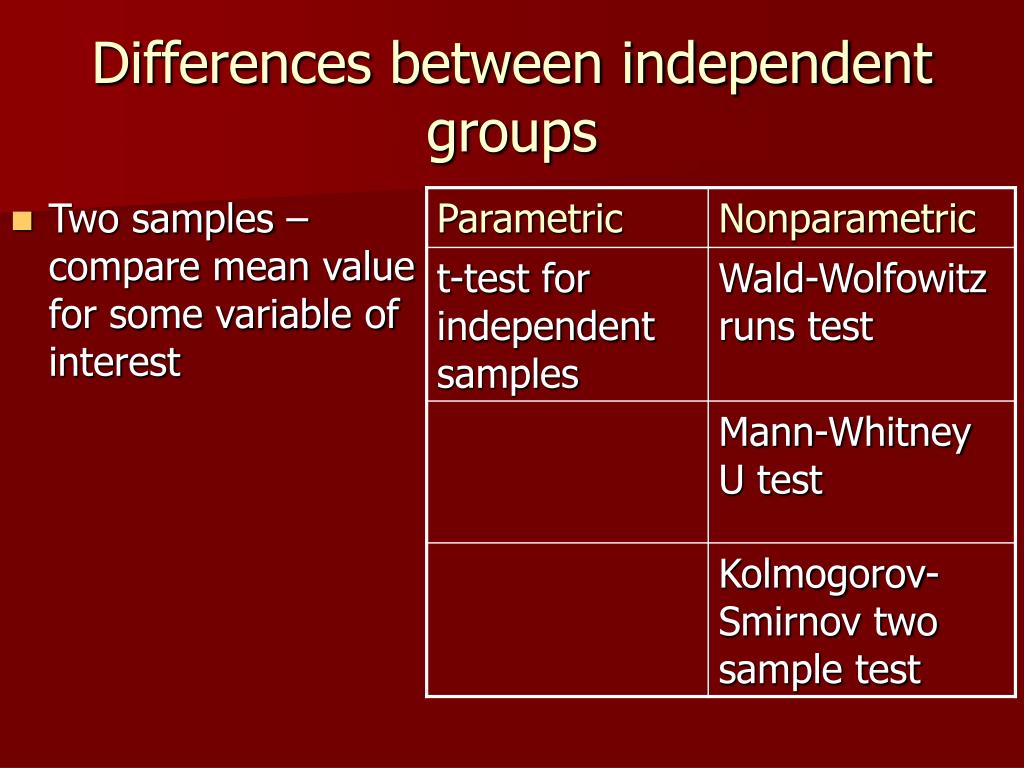
In a factorial experiment, the researcher has to decide for each independent variable whether to use a between-subjects design or a within-subjects design. Between-subjects and within-subjects designs are two different methods for researchers to assign test participants to different treatments. Independent Group Design refers to a research method where different participants are assigned to each group or condition being compared. This design allows for the comparison of the effects of different treatments or conditions on separate groups of participants. It is commonly used in experimental studies to minimize the potential for order effects and participant bias. Quasi experiments are when participants cannot be randomly allocated to conditions.
Unleashing the power of agile teams - McKinsey
Unleashing the power of agile teams.
Posted: Thu, 12 Jul 2018 07:00:00 GMT [source]
The platform also provides access to scientifically accurate illustrations, allowing researchers to visually represent complex concepts and structures. By enhancing the visual impact of their research through visually appealing figures, scientists can effectively communicate their work and captivate their audience. They will measure whether the groups differ significantly from each other due to the different levels of the treatment variable that they experienced.
Not only is it less stressful, but it’s more efficient and typically more cost-effective in the long run. Choosing an expert in this niche is imperative because their skill and technical know-how can ultimately make or break your physical design. Just as the Fashion-Incubator suggests, anyone can call themselves a pattern maker, so we’re here to help you understand how to choose the right Los Angeles pattern maker for your line. Where the same participants are allocated to all groups (i.e. take part in all conditions) of an experiment. Do we use the same people in all conditions or groups, or do we choose different people for different conditions or groups?
To achieve these goals, experimental designs prioritize data validity and reliability and internal and external experimental validity. When an experiment is valid and reliable, researchers can have confidence in the accuracy and consistency of their procedures and data, leading to reliable results. Because each subject is assigned to only one condition, this type of design requires a large sample. Thus, these studies also require more resources and budgeting to recruit participants and administer the experiments.


No comments:
Post a Comment